1. THE PARTY AND THE OPPOSITION.
Comrades, permit me to briefly summarize the struggle between the Party and the opposition, to sum up the discussion that has developed during the past three or four weeks within the Party and—it must be frankly stated—outside it.
The following statistical results are available: up to now something over five hundred and seventy-two thousand comrades have declared for the Party, for its Central Committee, and something over three thousand for the opposition.
The opposition is usually fond of flaunting figures, percentages, claiming to have the support of 99% and so forth. Everybody sees now that over 99% have declared against the opposition and for the Central Committee of the Party.
Who is to "blame" for that? The opposition itself! Every now and again the opposition has tried to push us into a discussion. For two years now hardly a day has passed by without the opposition making a new demand for a discussion. We resisted that pressure; we members of the Central Committee resisted that pressure, knowing that our Party is not a debating society—as Lenin quite rightly said—knowing that our Party is the militant party of the proletariat, surrounded by enemies, engaged in building socialism, faced with an enormous number of practical tasks of creative activity and therefore unable to concentrate all its attention every so often on disagreements within the Party.
But the opposition pressed for a discussion and a month... more than a month... before the Fifteenth Congress, the Party, in conformity with the Party Rules, said: Very well, you want a discussion, you want a fight—let's have it then! And here's the result: over 99% declare for the Party, for its Central Committee, and less than 1% for the opposition.
The opposition's bluff has been called a hundred per cent, so to speak.
It might be argued that this outcome is not decisive, that besides the Party there is also the working class and the masses of labouring peasantry, that the votes remain to be counted in that broader domain.
That's not true, comrades! The votes have been tallied in that domain too.
What were the November Seventh demonstrations in all the cities and villages of our vast country? Were they all not tremendous evidence of the vote cast by the working class, by the labouring sections of the peasantry, by the Red Army and by the Red Navy for our Party, for the government, and against the opposition, against Trotskyism?
Is not the shame that the opposition brought on itself on the Tenth Anniversary of October, the unanimity of millions of working people greeting the Party and the government on that day proof that not only the Party but also the working class, not only the working class but also the labouring sections of the peasantry, not only the labouring sections of the peasantry but also the entire Army and the entire Navy, stand like a rock for the Party, for the government and against the opposition, against the disrupters?
(Prolonged applause)
What more tallies do you need?
There you have, comrades, a brief summary of the struggle between the Party and the opposition, between the Bolsheviks and the opposition, the struggle that flared inside the Party and subsequently, by the opposition's own fault, trespassed the bounds of the Party.
How can this ignominious defeat of the opposition be explained? It's a fact that no other opposition in the history of our Party since the Bolsheviks took power has ever suffered such an ignominious defeat.
We know about the opposition of the Trotskyists at the time of the Brest Peace. At that time it had the support of about a quarter of the Party.
We know about the Trotskyist opposition in 1921 during the trade-union discussion. At that time it had the support of about one-eighth of the Party.
We know about the so-called "New Opposition" (Zinoviev-Kamenev bloc) at the Fourteenth Party Congress. It then had the support of the entire Leningrad delegation.
But now? Now the opposition is more isolated than ever. It's doubtful whether now it will even have one delegate at the Fifteenth Party Congress.
(Prolonged applause)
The failure of the opposition is due to its being completely divorced from the Party, from the working class, from the revolution. The opposition has turned out to be a handful of intellectuals divorced from life, divorced from the revolution. That's the root of the opposition's ignominious failure.
Let us, by way of a test, take two or three questions that divorce the opposition from the Party.
The question of the relations between the working class and the peasantry.
Lenin said that the question of the relations between the working class and the peasantry in our country is a fundamental question of the dictatorship of the proletariat, the fundamental question of our revolution. He said:
Ten or twenty years of correct relations with the peasantry, and victory on a world scale is assured (even if the proletarian revolutions, which are growing, are delayed).
(V. I. Lenin, "Outline of the Pamphlet The Tax in Kind"; see Works, 4th Russ. ed., 32, pp. 302-03)
What are "correct relations with the peasantry"? By correct relations with the peasantry Lenin meant the establishment of a "stable alliance" with the middle peasants while relying on the poor ones.
But what is the opposition's view on this question? It not only attaches no value to the alliance between the working class and the peasantry, it not only fails to appreciate the immense importance of such an alliance for the progress of our revolution, but it goes "further" and proposes a policy that would inevitably lead to the break-up of the alliance between the working class and the peasantry, to the rupture of the bond between the working class and the peasantry.
Not to search far for a proof, I could refer to Preobrazhensky the opposition's chief economist who regards the peasantry as a "colony" for our industry, as an object to be exploited to the utmost.
I could also refer to a number of the opposition's documents in favour of raising the prices of manufactured goods, which would inevitably cause our industry to wilt, would strengthen the kulaks, ruin the middle peasants and force the poor peasants into bondage to the kulaks.
All these and similar opposition documents are part and parcel of the opposition's policy calculated to cause a rupture with the peasantry, a rupture with the masses of the middle peasantry.
[...]
The question of the Party.
Lenin says that unity and iron discipline in the Party are the basis of the dictatorship of the proletariat. The opposition holds the opposite view in actual fact. The opposition thinks that we do not need unity and iron discipline in the Party as a basis of the proletarian dictatorship but destruction of the Party's unity and discipline, division in the Party and creation of a second one. True, the opposition talks and writes, writes and talks, and not so much talks as howls about Party unity, but the opposition's talk about Party unity is hypocritical chatter calculated to deceive the Party.
(Applause)
For while talking and shouting about unity the opposition is constructing a new anti-Leninist party. And it's not only engaged in building it, it has already built it, as is shown by authentic documents such as the speeches of Kuzovnikov, Zof 2 and Reno, former oppositionists.
Presently we have exhaustive documentary evidence that for over a year now the opposition has had its own anti-Leninist party with its own Central Committee, regional bureaus, gubernia bureaus and so forth. What can the opposition oppose to these facts except hypocritical chatter about unity?
[...]
Let's pass to the third question, the question of the prospects of our revolution.
The characteristic feature of the whole line of the opposition is disbelief in the strength of our revolution, disbelief in the proletariat's strength and capacity to lead the peasantry, disbelief in the strength and capacity of the working class to build socialism.
I have already quoted the passage from Smirnov's speech about the inevitable "doom" of our revolution if we do not establish discord with the middle peasantry. This is not the first time that we have heard the opposition sing about the "doom" of the revolution. This is not the first time that we have encountered in the opposition's declarations continual whining and consternation in the face of difficulties, predictions of the twilight and collapse of our revolution. Since the opposition's factional policy began to suffer defeat after defeat the opposition has not ceased to shout about the "doom" of our revolution, making their own doom out to be the "doom" of the revolution. The opposition has only to find itself in the minority, to get a drubbing from the Party, for it to rush out into the street and start shouting about the "doom" of the revolution and to blame all difficulties on the Party.
As early as the Brest Peace discussion of 1918, when the revolution experienced certain difficulties, Trotsky—after being defeated at the Seventh Party Congress—began to shout about the "doom" of our revolution; but the revolution did not perish and Trotsky's prophecies remained empty.
In 1921 during the trade-union discussion when we were faced with new difficulties born of the abolition of the surplus appropriation system and Trotsky suffered another defeat, at the Tenth Party Congress, he again began to shout about the "doom" of the revolution. I well remember Trotsky asserting in Lenin's presence at a meeting of the Politburo that the Soviet regime had "sung its swan song," that its days and hours were numbered.
(Laughter)
But the revolution did not perish, the difficulties were overcome and the hysterical fuss about "doom" of the revolution remained mere fuss.
I don't know whether the days and hours were then numbered or not; but if they were, all I can say is they were wrongly numbered.
(Applause, laughter)
In 1923 during a period of new difficulties, this time arising out of the N.E.P., at the time of the market crisis, Trotsky again began a swan song about the "doom" of the revolution, making his group's defeat at the Thirteenth Party Conference out to be a defeat of the revolution. The revolution ignored his swan song, however, and overcame the difficulties facing it.
In 1925-26 during a period of new difficulties caused by our industry's progress, Trotsky, this time in a chorus with Kamenev and Zinoviev, again began a swan song about the "doom" of the revolution, making the defeat of his own group at and after the Fourteenth Party Congress out to be a defeat of the revolution. The revolution had no intention of dying, however. The self-styled prophets were shoved to the background and the difficulties overcome—as always, as in the past—for Bolsheviks do not look upon difficulties as something to wail and whine over but as something to overcome.
(Loud applause)
Now at the end of 1927, owing to new difficulties in the task of revamping our whole economy on a new technical basis, they have again started a swan song about the "doom" of the revolution, trying in this way to cover up the real doom of their own group. But, comrades, you all see that the revolution is alive and thriving while others are the ones perishing.
And so they sang and sang their swan song until they found themselves in a hopeless position at last.
(Laughter)
The opposition's "platform" is a platform of "doom and gloom" for our revolution.
Such is the opposition's actual platform on the three principal questions we disagree on: the question of the working class and the peasantry, the question of the Party and the dictatorship of the proletariat and finally the question of the prospects of our revolution.
You see that this queer platform testifies to the opposition's complete divorce from the Party, from the working class, from our revolution. It's the platform of intellectuals who have broken with Leninism and are divorced from life.
Is it surprising after all this that the Party and the working class have completely turned away from the opposition?
That's why the opposition suffered ignominious defeat in its struggle against the Party during the last discussion.
What next?—we are asked.
The opposition complains that it submitted a declaration on unity signed by thirty-one Trotskyists the other day but has not yet received a satisfactory answer.
But what answer indeed can be given to the hypocritical declaration of thirty-one Trotskyists when the opposition's bogus declarations are refuted time and again by its own splitting endeavours?
The history of our Party records a similar declaration made by thirty-one Mensheviks, I think in 1907.
(Voices from the audience: "That's right!")
Lenin at the time called that declaration "the hypocrisy of the thirty-one Mensheviks."
(Laughter)
I think the hypocrisy of the thirty-one Trotskyists is quite analogous to the hypocrisy of the thirty-one Mensheviks.
(Voices from the audience: "Quite true!")
The opposition has deceived the Party twice. Now it wants to deceive the Party a third time. No, comrades, we've had enough of deception, enough of games.
(Applause)
What next?
The limit has been reached, comrades. The opposition has exceeded all bounds of what is permissible in the Party. The opposition cannot go on swinging back and forth from party to party, from the old Leninist Party—the one and only Party—to the new Trotskyist party. It must choose one or the other.
Either the opposition itself does away with the Trotskyist party, renounces its anti-Leninist views and denounces its errors before the whole Party frankly;
or the opposition fails to do that—in which case we ourselves will do away with the Trotskyist party altogether.
(Applause)
One thing or the other.
Either the oppositionists take this necessary step, or they do not, and in that case they will be sent flying out of the Party.3
(Stormy and prolonged applause)
(An ovation from the entire hall. The "Internationale" is sung)
2. THE FIFTEENTH CONGRESS OF THE COMMUNIST PARTY.1 REPLY TO THE DISCUSSION ON THE POLITICAL REPORT OF THE CENTRAL COMMITTEE.
From Kamenev's speech it is evident that the opposition does not intend to disarm completely. The opposition's declaration of December 3 indicates the same thing. Evidently the opposition prefers to be outside the Party. Well, let it be outside the Party. There is nothing terrible or exceptional or surprising in the fact that they prefer to be outside the Party, that they are cutting themselves off from the Party.
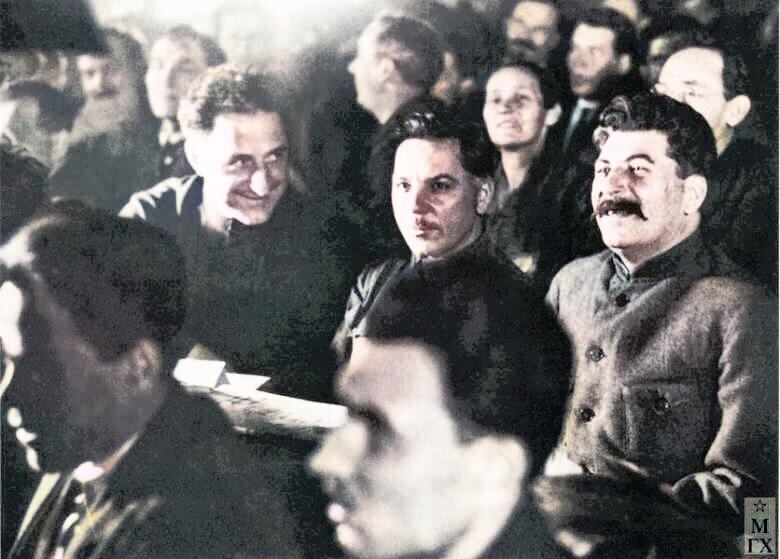
If you study the history of our Party you will find that always, at certain serious turns taken by our Party, a certain portion of the old leaders fell out of the cart of the Bolshevik Party and made room for new people. A turn is a serious thing, comrades. A turn is dangerous for those who do not sit tight in the Party cart. Not everybody can keep his balance when a turn is made. You turn the cart—and on looking round you find that somebody has fallen out.
(Applause)
Let's take the Second Congress of our Party in 1903. That was the time when the Party turned from agreement with the liberals to mortal struggle against them, from preparing the assault on tsarism to open struggle, for completely routing tsarism and feudalism. At that time the Party was headed by six: Plekhanov, Zasulich, Martov, Lenin, Axelrod and Potresov. The turn proved fatal to five out of the six. They fell out of the cart. Lenin alone stayed.
(Applause)
It turned out that the old leaders of the Party, the founders of the Party (Plekhanov, Zasulich and Axelrod) plus two young ones (Martov and Potresov) were up against one, also a young one, Lenin. If you only knew how much howling, weeping and wailing there was then—the Party was doomed, the Party would not last, nothing could be done without the old leaders. The howling and wailing eventually subsided but the facts stood out. And the facts were that precisely thanks to the departure of the five the Party succeeded in getting onto the right road. It's clear to every Bolshevik now that if Lenin had not waged a resolute struggle against the five, if the five had not been pushed aside, our Party could not have rallied as a Bolshevik Party capable of leading the proletarians to revolution against the bourgeoisie.
(Voices: "That's true!")
Let's take the next interval, 1907-08. That was the period when our Party turned from open to covert revolutionary struggle, to the taking advantage of all the legal means available—from insurance funds to the Duma floor. It was a period of retreat after we were defeated in the 1905 Revolution. This turn compelled us to master new methods of struggle before resuming open revolutionary struggle after mustering our forces. But this turn proved fatal to a number of old Bolsheviks. Alexinsky fell out of the cart. At one time he was quite a good Bolshevik. Bogdanov fell out. He was one of the most prominent leaders of our Party. Rozhkov—former member of the Central Committee of our Party—fell out. And so forth. There was perhaps no less howling and wailing than there had been in 1903. The howling subsided, however, the facts stood out. And the facts showed that the Party would not have been able to get onto the right road in the new conditions of struggle had it not purged itself of the waverers who were hindering the cause of the revolution. What was Lenin's object at that time? He had only one object: to rid the Party of unstable and whining elements as quickly as possible, so they should not get in our way.
(Applause)
That's how our Party grew, comrades.
Our Party is a living organism and like every organism undergoes metabolism: the old and obsolete passes away, the new and modern lives on.
(Scattered intermingled applause growing to general applause)
Some go away, both at the top and at the bottom. New ones grow both at the top and at the bottom and lead the cause forward. That's how our Party grew. That's how it will continue to grow.
The same must be said about the present period. We are turning from a restoration of industry and agriculture to reconstruction of the entire national economy, reconstruction on a new technical basis, when the building of socialism is no longer a prospect but a living practical reality which calls for surmounting extreme internal and external difficulties.
You know that this turn has proven fatal to the leaders of our opposition, who were scared by the new difficulties and intended to turn the Party in the direction of surrender. And if certain leaders who do not want to sit tight in the cart fall out, it's nothing to be surprised at. It will merely rid the Party of people who are getting in its way, hindering its progress. Evidently they desire to free themselves from our Party cart seriously. Well, if some old leaders who are becoming trash intend to fall out of the cart—a good riddance to them!
(Stormy and prolonged applause)
(The whole congress rises and gives Comrade Stalin an ovation)
3. THE VICTORY OF STALIN OVER TROTSKY.
The Fifteenth Congress of the Communist Party |
The Girl With The Hatbox (1927) |
Source Right: All soviet movies on RVISION.
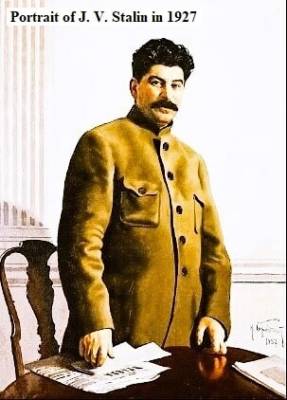
The recent news we received from Russia indicate that the Opposition has lost—perhaps decisively—the game against the Government. Trotsky and Zinoviev have been reduced to silence because they represent only a paltry minority compared to the huge governmental majority. The Opposition was always in the minority but at least it could speak on behalf of the "Old Bolshevik Guard," whereas now names of as much prestige as those of Solkonikov and Krupskaya, Lenin's widow, have deserted it. Krupskaya joined the Opposition two years ago and lent it considerable moral clout; now she has not only broken with Trotsky but censured him sharply, calling for the strictest discipline in light of the perils that menace Bolshevism.
In effect the Government, whose strongest representative is Stalin the Secretary-General of the Communist Party, has adroitly exploited England's break of diplomatic relations with the Soviets plus the expected creation of an European anti-Bolshevik bloc. Invoking the external peril Stalin smashed the Opposition before it could expound its program. As a result of the very strict censorship the Opposition lacks a printed organ, i.e., we do not know what its program is except through verbal comments or from the rebuttals of government columnists in contrarian newspaper articles.
One of the more surprising facets of the Russian Revolution is the discipline which Bolshevik figures have imposed upon the whole Party. If we compare it to the French Revolution we will see that the Russian one does not own dramatic episodes like the contest between Danton and Robespierre, the execution of each, the Eighteenth Brumaire, etc. The Bolsheviks have been ruthless with their opponents, but inside the Party they have not done themselves any mutual harm. All reports that spoke of an intra-Party fight have proven false.
However since Lenin's death the Party has lost its unity, at least its moral unity. Aforetime Leo Trotsky—to whom the Revolution owes its triumph, more than it does to Lenin even, and who knew how to create the Red Army out of the chaos—logically aspired to be Lenin's successor and saw with distaste how the stewardship of the Party and the State lay in the hands of a triumvirate formed by Stalin, Zinoviev and Kamenev. Then Trotsky published his famous book on the Bolshevik coup d'état, exposing the inglorious role played by the triumvirate in those days. The triumvirate exacted revenge on Trotsky by banishing him to the Caucasus. Later Stalin also managed to get rid of Zinoviev and Kamenev. The two then joined Trotsky and captained the opposition to Stalin. Finally Kamenev deserted his mates and accepted Stalin's offer of the post of ambassador to Rome. And the struggle between the Opposition and the Executive Power has just finished with the complete defeat of the former.
What does the Opposition reproach the Government for? Foremost for having discarded the idea of the world revolution; secondly for distorting the Bolshevik Revolution by forsaking the industrial workers in benefit of the peasants; lastly for applying abroad, particularly in China, an entirely erroneous policy. According to the Opposition, the Bolshevik Revolution was not an end in itself but a means for igniting the revolution worldwide. According to Trotsky and his mates, the Government of Moscow is "nationalist and petit-bourgeois", i.e., it thinks only about Russia and the slow improvement of its economy when it should be thinking about the world revolution. Trotsky adds that the Government has given in to the wealthy peasants [the kulaks] who constitute a new bourgeoisie very dangerous for the achievements of a Revolution which ought to be exclusively proletarian. As regards China, Trotsky proposed the political independence of the Communist workers and peasants whereas Stalin imposed collaboration with the Kuomintang Nationalist Party. General Chiang Kai-shek's desertion and the rift between the Kuomintang and the Communists proved that Trotsky was right (from a communist perspective). Nevertheless the overwhelming majority of the Party has favoured Stalin, and the Opposition has virtually ceased to exist.
UN DIPLOMATICO.
London: James Henry Thomas the former Secretary of State for the Colonies in Ramsay MacDonald's government delivered a speech in the House of Commons. After condemning the break of diplomatic relations with the Soviets, Thomas attacked Russia's current policy and said, "I am in complete disagreement with Moscow and its baneful regime. How can the Russian Government call itself democratic when it suppresses all the freedoms we enjoy here? I am fully certain that the Soviet regime will never be imported to Great Britain because we still have enough common sense to obviate it. Those who say the opposite are living in a madman's paradise for neither Moscow's propaganda nor Moscow's cash will advance the Bolshevik cause in Great Britain one jot."
Washington: The vice president of Georgetown University, back from a voyage to Europe undertaken to study the Soviet question, has declared that Europe sits on a volcano liable to erupt at any moment into war, which will settle whether or not Soviet policy will triumph.
Moscow, 17: Trotsky has professed that he will have deposed Stalin before December 1, the date of the next Party Congress.
Riga: "Nasrula Ismailov" (?) the Soviet executioner in the Caucasus has shot 3,854 persons sentenced to death by Soviet tribunals.
What is happening in Russia? Contradictory reports arrive from Russia. Riga, that Koblenz, only feeds the West unconfirmed rumours. Still one perceives through them—rather than guesses—that official and bureaucratic communism is traversing a very serious crisis.
I know of many bourgeois who are amazed that the Bolsheviks still rule that immense Slavic country. They supposed back in the autumn of 1917—when initial radiograms from Petrograd arrived telling the exultant Central Powers and the astonished Allies that after Kerensky's downfall a government of People's Commissars ruled—that the demon-possessed ones who blazed prikase from the Smolny Institute could not survive for more than a few weeks. The stupendous adventure had to end with the advent of a White or Red general and a more-or-less fallback to the old order of things. At most they envisioned a constitutional empire under the scepter of Grand Duke Nicholas Nikolaevich or Grand Duke Cyril.
Come this October the Soviets will have ruled Russia for ten years. Ten years!... In the postwar chaos the rule of the People's Commissars has been the sturdiest of all those that emerged victorious during and after the hostilities. Several times the counter-revolutions of Yudenich, Gajda, Kolchak, Denikin and Wrangel endangered the new regime, which only survived thanks to the not-very-stalwart support of the urban proletariat. The Communists made up 0.5% of the entire Slavic Commonwealth. Yet that percentage sufficed because it had at its disposal all the levers of the great autocratic machine, because ministries, police, bureaucrats, railways and the telegraph were in its hands, and because there was no Army...
There was no Army. That was the enormous weakness and the gigantic strength of the Reds. Gajda's Czechs, the Whites of Yudenich, Kolchak, Denikin and Wrangel were advancing without opposition. The Baltic sailors—Lenin's and Trotsky's praetorian guard—the worker batallions of Moscow, Petrograd and Kiev could not contain the counter-revolution's tidal waves. The northern wave reached the Neva, the southern and eastern waves did not venture past Nizhny Novgorod. Why didn't they? The mystery is unraveling. The countryside confronted the ones and the others with its insurmountable inertia. But the more-astute Reds knew how to use it to their advantage. Lenin had offered the muzhik peace and land. And the Whites did not comprehend that the irremediable had happened...
Trotsky made good the critical days when the peasant, after receiving his plot of land, wavered between remembrance and novelty. Trotsky created a revolutionary army out of nothing by mixing old elements with new enthusiasms that brooked the old discipline. Thus Tsarist commanders and officers, seeing themselves respected, did not balk at the thought of serving the Soviets with their swords. And lo, Brusilov became a military adviser to the government of the People's Commissars, and Evert a Commander-in-Chief who defeated Kolchak, pursued him across the Siberian woodland, destroyed his rearguards and caused him to die...
Presently there is no organized opposition in Russia capable of rising up against and toppling the Soviets. Yes, there is a rural stratification of classes, foreseen by Gorki, which has in the kulak, the well-off peasant, its highest exponent.
If the Soviets have nothing to fear from Tsarist Whites, more-or-less partisans of Nicholas or Cyril, they have everything to fear from their own disputes. Two strongmen, hard, cruel and ambitious both, are facing off inside the communist realm. Stalin the heir of Lenin, axis and crown wheel of the bureaucratic apparatus, spirit of the second Tcheka, fends off a prolix and bold Leo Trotsky, pragmatic, realistic, nimble, who proposes not-very-sincere compromises in the spirit of the West.
And the people of Moscow do not ponder who has the support of the masses because they know that the masses will not follow anyone but abide in a pliable and disdainful neutrality. What they do ask themselves is whom the Red Army will follow...
FABIAN VIDAL.
The state of affairs in the Soviet paradise is not good, to say the least. The statements made in the plenary session of the Central Committee and the Central Control Commission are an eloquent demonstration. As is known, the government represented by Stalin and Rykov has engaged the opposition led by Trotsky in a duel to the death. The government has been obliged to buckle somewhat. What makes the session interesting, however, are the declarations made and reproduced in the Bolshevik dailies. These declarations make it quite clear that the economic situation is deteriorating in Paradise.
Let the reader evaluate the following excerpts:
Rykov, president of the Council of People's Commissars — Our international trade balance will suffer until we find new markets and new sources of credit to replace the British ones... This year we will have to surmount serious budgetary strains. Whereas the Soviet budget may grow by no more than 10-15% it is requisite to increase disbursements sharply to finance outfitting the nation. Payments required this year for industrial production alone will exceed a thousand million rubles (thirteen thousand million francs, under the current exchange rate) and this figure must increase every year hereafter.
Kuybyshev, president of the Supreme Council of the National Economy — All efforts to lower the costs of Soviet industry have failed. The reports received during the first semester of the current year have shown that not only does industry disagree with the Government's instructions for lowering costs by 5% but it has seen those costs rise by 1% this year. Outlay increases are the fruit of a complete disarray of work and productivity. For example, the productivity of the glassmaking sector has risen 5% and wages 1%.
Radek, leader of the opposition — It will not be possible over the next six months to hide from the conscience of the Party and of the working masses that the revolution faces the biggest hurdles.
Trotsky, another leader of the opposition — It is possible to affirm from the entire data that industry will not have sufficient stocks of manufactured goods [to satisfy the peasantry's demand] in case of a good harvest. This will heighten last year's troubles in a more pressing manner.
Kamenev, another leader of the opposition — The period we are now entering can aggravate our problems in case of a good harvest for it will mean a shortage of merchandise, higher prices, difficulties in the domain of exports, fewer imports...
Paradoxical and astonishing conclusion: It's necessary to hope—if Trotsky's and Kamenev's declarations are taken literally—that the harvest be a bad one...
Behold what future lies in store for the Soviet paradise...
Madrid, 7: News from Leningrad state that the court martial of twenty-six spies will be held tomorrow.
Moscow: A "big" earthquake shook Moscow. Several buildings suffered "enormous" damage. The old Czarist palace of Libalda tumbled down and the High Tower also.
The news from Sevastopol say that "intense" seismic phenomena were registered in the capital. Telegraph and telephone communications are down.
Note: According to Wikipedia, this earthquake actually struck on September 11, 1927. The earthquake rattled the Crimean Peninsula with a magnitude of 6.7 on the Richter Scale and a depth of thirty-five kilometres.
Moscow: An official communiqué states that the High Tribunal of Leningrad sentenced four Army officers to death, charged with spying for Great Britain. The four were executed.
Moscow: The Government decided to expel forty-three Trotskyites from the Party.
Civil war looms over Russia. Stalin's resolution banning Trotsky from speaking publicly has not had any effect as the former Minister of War has addressed a meeting of workers in Leningrad.
Trotsky bragged that the Opposition is strong enough to not fear reprisals and that the number of followers rises continually. He added that Stalin's policy will steer the people toward civil war and a new bloody Thermidor. He called Stalin an impostor, adding that he is more concerned with the theatrical impact of his interventions than with providing bread and employment for workers.
A member of the Leningrad Soviet has tabled a motion requesting Trotsky's expulsion from the Communist Party.
Madrid, 3: The Communist Party of Moscow has decided to expel Trotsky and Zinoviev.
Riga: Many soldiers and officers of the Red Army were arrested accused of preparing a revolution to overthrow the Government of the Soviets, imprison Stalin and other figures of the Central Committee of the Communist Party and establish a military-style dictatorship.
Berlin, 14: The Russian Communist Opposition has circulated a manifesto against Stalin throughout Germany. The manifesto affirms that the number of unemployed workers in the Soviet Republic has reached two million.
New York: A Soviet envoy has visited several American bankers over the past few days in order to obtain a loan of a hundred million USD destined for the emission of Soviet bonds yielding 3.5% interest yearly, redeemable in sixty years. He was told that as long as the U.S.S.R. brushes aside its debt with the United States, the States will not recognize the Soviets as a de facto government. Until then all discussions are futile.
The total Tzarist debt contracted with the U.S. is 187,729,750 USD.
Berlin: A telephone line is in operation between Moscow and Berlin. The line is twenty thousand kilometers long and links Moscow, Warsaw and Berlin. The first audition trials yielded excellent results. This is the longest telephone line in Europe.
Geneva: Reports from Moscow state that Zinoviev, Radek and Yevdokimov delivered speeches in the Russian capital and in Leningrad, grossly insulting Stalin and the Bolshevik Central Committee.
The police attacked Opposition supporters violently; there were several dead and many injured.
Civil war is feared in Russia: The French socialist newspaper Le Populaire publishes a letter dated November 3. An excerpt follows,
Moral depression is widespread in the communist realm. There is no faith in the stability of Power; everybody questions whether the dictatorship of the Party can survive the disorders which become more inevitable each passing day... Now all communists understand that the dictatorship has taken the road of terror, even against yesterday's Party figures, and that after the expulsions will come the imprisonments and later, at the proper time, the executions perhaps.
London: Zinoviev and Trotsky have issued a Manifesto against the Soviet Government in which they declare that the government's foreign policy is a failure for the following reasons: (1) mismanagement of the Chinese revolution, (2) the shameful failure of Communist involvement in the strikes of British miners, (3) the break of diplomatic relations with Great Britain, (4) the semi-break of diplomatic relations with France, (5) letting unresolved the question of the Russian debt, (6) provoking a rift in the Third International, and (7) inducing some members of the Communist Party to lean to the Right.
On the domestic front Trotsky and Zinoviev also table these charges against the Government: (1) the living standard of Russian workers is not improving, (2) the working class shuns central policies more and more often, (3) the wealthy peasants consolidate their economic status, (4) the peasants display worrisome political tendencies, (5) the campaign to lower retail prices has failed utterly, (6) the number of unemployed workers rises daily, (7) the delivery of foodstuffs to the cities deteriorates daily.
Their assessment of the current situation in Russia undermines the government all the more because it proceeds not from the enemies of Bolshevism but from leaders of the Communist Party. It's believed that this manifesto will swing a great number of Communists over to the Opposition.
Trotsky and Zinoviev have been expelled from the Communist Party. Joffe has put an end to his life. Radek, Rakovsky, Kamenev, Muralov and six more have been excluded from the Central Committee. Stalin's triumph is complete. The "Old Guard" of 1917, the group that most closely collaborated with Lenin, has been substituted by the new generation, by Stalin's personal friends.
Let's examine the names of the vanquished: they are all intellectuals, many are Israelites, i.e., urbanites far removed from the peasantry. By common origin and by the ideology they represented over the years they have to champion the urban proletariat, the industrial workers, i.e., they are inevitably the defenders of "pristine" militant communism—not only anti-bourgeoisie but also anti-peasantry—from the epoch of the civil wars which stretched from 1917 to 1921. We believe that this reflection gets across, better than long elaborate paragraphs, the essence of the civil struggle that is taking place in Russia of the Soviets. On the one hand the "Old Guard" of steadfast communism, on the other a policy of compromise with the peasantry. Peasants comprise 85% of the population. It's not possible to contend against them politically over a prolonged sequence of five-year terms.
[...]
What then is left of the communist regime? A type of State capitalism that monopolizes everything: mines, big industry, foreign trade; and which nevertheless affords ample room for private capital. Russia is a State of monopolies and the "dictatorship of the proletariat" cliché an empty phrase.
Withal Russia is also a country with a single legal Party. Exclusion from the Bolshevik Party is equivalent to losing all rights. Henceforth Trotsky and Zinoviev won't be able to work in the public sector or even have the right to vote. In the upcoming Congress it's possible that all of Trotsky's supporters will be expelled from the Party also, and in that case, the Opposition will be forced to choose between absolute resignation or open rebellion. But rebelling against the Party is equivalent to betraying the State. Trotsky and his friends will no longer be considered an opposition group within the Bolshevik Party but leaders of a counter-revolutionary movement, a crime whose punishment is the dungeons of the "Tcheka" or death.
UN DIPLOMATICO.
Berlin, 22: They say from the Russian border that Stalin's bodyguards manhandled Trotsky viciously.
Some soldiers pounce on Trotsky: Trotsky the ex-Commissar of War of the Soviets has been the object of an assault by a group of soldiers from Stalin's personal guard. The soldiers knocked Trotsky down to the ground and beat him brutally. The incident is related to the persecutions which, according to a Moscow daily, the expelled supporters of Trotsky are subjected to. These supporters are not allowed to dwell in such cities as Moscow, Leningrad, Odessa, Kiev and others of lesser importance.
London: Reports from Moscow say that Trotsky's supporters in the Ukraine staged a demonstration against Stalin. They and Red soldiers clashed, leaving many injured.
London: Dispatches to the Daily Mail from Riga report that the trains leaving Moscow for the North and the East are loaded with large numbers of ex-Opposition members.
Leningrad: The Smolny Institute, a pre-revolution aristocratic school where Lenin directed the victory of the communist revolution from, has been converted to a public Museum commemorating Lenin. Two rooms are preserved just as Lenin and his sister Anna Ulyanova used them between April to July 1917.
[...]
Among the more curious objects found in this museum is a chess set which Lenin was gifted with on his fiftieth birthday [April 22, 1920]. The chess pieces represent personalities involved in the revolutionary epoch and were carved by pupils of the School of Industrial Arts.
The pieces representing the Reds portray a worker as King, a peasant woman as Queen, and others figures like Stalin 😜 Chicherin, Rykov, Frunze, Tomsky, etc.
The black pieces have Nicholas II as King, the Tsarina as Queen, and other figures like Purishkevich, Rasputin, and Milyukov, etc.
The tenth anniversary of the Bolshevik triumph in Russia has coincided with the greatest and gravest intra-Party crisis. I have here, atop my desk, a literal heap of European journalistic literature describing or commenting on the tough struggle currently underway between the Red power and the Red opposition, between Stalin and Trotsky. I have just finished rereading the typed copy of the recent speech pronounced by Trotsky before the Central Committee, such as the unofficial Pravda published it. It was a ghastly speech. The speaker hurled toward the Red rulers' faces the harshest accusations of betrayal of the communist ideal. He was heckled continuously with shouts like these: "Shame!... Scum!... Bourgeois!... Menshevik!... Scammer!... Down!... Perish!..."
Yaroslavsky, one of the hecklers, proposed sarcastically to celebrate a Mass for Trotsky's eternal rest. He did not exaggerate too much: it can be affirmed that the leader of the United Opposition has set down his life on the roulette from here on. He and his supporters were removed from their posts and expelled en masse from the Party. The duel to the death between the government and the opposition has begun. It looks like one of the two will fall in a brutal manner, given the measure of Russian etiquette today. The stress is such that, unable to endure it, nerves frayed, one of Trotsky's mates, pitiful Joffe, committed suicide in Moscow.
[...]
GAZIEL.
Zurich: It is assured in communist centers that the situation facing the Government of the Soviets is grave and it is highlighted that G.P.U. agents did not dare to detain Trotsky and Zinoviev despite the searing attacks directed by both leaders versus Stalin in the speeches the two delivered before Lenin's tomb. That day the leaders of the Red Opposition were surrounded by a large number of supporters armed to the teeth.
The president of the Supreme Council of National Defence had to rush off to Kronstadt because sailors and petty officers of the Red Fleet threatened to revolt if Trotsky and Zinoviev were shot. The president promised the sailors that the leaders of the Red Opposition would not be persecuted for the deeds they had done to date and added that if they continued their attacks on Stalin and if it were necessary to try them they would be judged by a completely impartial Tribunal.
Chicago: The Chicago Tribune correspondent in Bucharest affirms that revolution has broken out in Southern Russia. Pro-Trotsky soldiers refused to obey the orders of the Executive Committee and a clash ensued which saw General "Leceivich" (?) arrested by Tcheka agents and set free immediately by the troops.
The Soviet Commissar was murdered and his head paraded on a pike through the streets of Odessa.
Moscow: The general Congress of the Communist Party enacted the expulsion of two hundred supporters of Trotsky. Stalin has with his vigorous attitude obviated the dissolution of the Communist Party.
Trotsky has fewer supporters each passing day.
Moscow: Moscow's snowstorms acquire "gigantic proportions"; snow has buried many buildings. The damages are "terrifying" and the tally of victims "extremely high."
| And Now For Something Completely Different |