1. THE SEVENTH ENLARGED PLENUM OF THE E.C.C.I.1 REPLY TO THE DISCUSSION.
I pass to the last question, the question of the opposition bloc and the unity of our Party.
How was the opposition bloc formed?
The Party affirms that the opposition bloc was formed by the passing over of the "New Opposition" (Kamenev and Zinoviev) to Trotskyism.
Zinoviev and Kamenev deny this and hint that it was not they who went over to Trotsky but Trotsky who came over to them.
Let us turn to the facts.
I have spoken of the Fourteenth Conference [April 27-29, 1925] resolution on the building of socialism in our country. I said that Kamenev and Zinoviev renounced that resolution, a resolution which Trotsky does not and cannot accept, and renounced it in order to come closer to Trotsky and to go over to Trotskyism. Is that true or not? Yes, it is true. Did Kamenev and Zinoviev try to controvert that assertion in any fashion? No, they did not. They passed over the question in silence.
Moreover we have the resolution of the Thirteenth Conference of our Party [January 16-18, 1924] which qualifies Trotskyism as a petty-bourgeois deviation and as a revision of Leninism.2
This resolution, as you know, was endorsed by the Fifth Congress of the Comintern [June 17 to July 8, 1924]. I said in my report that Kamenev and Zinoviev had renounced this resolution, and their special statements declared that Trotskyism had been right in its struggle against the Party in 1923. Is that true or not? Yes, it is true. Did Zinoviev and Kamenev try in any way to controvert that assertion? No, they did not. They passed over it in silence.
Here are some more facts. Kamenev wrote about Trotskyism in 1925 as follows,
Comrade Trotsky has become the channel through which the petty bourgeois elemental forces manifest themselves in our Party. The whole character of his pronouncements and his whole past prove that this is so. In his fight against the Party he has already become a symbol in the country for everything opposed to our Party... We must take every measure to prevent this non-Bolshevik teaching from infecting and capturing the youth of our Party who will eventually have its destiny in their hands. It must therefore be the immediate task of our Party to undertake every means of explaining the errors of Comrade Trotsky's position and to stress that it's necessary to choose between Trotskyism and Leninism, that the two cannot be combined.
Would Kamenev be bold enough to repeat those words now? If he is prepared to repeat them, why is he in a bloc with Trotsky now? If he does not venture to repeat them, is it not clear that Kamenev has deserted his old position and gone over to Trotskyism?
Zinoviev wrote this about Trotskyism in 1925,
Comrade Trotsky's latest pronouncement (The Lessons of October) is nothing but a fairly open attempt to revise or even directly liquidate the fundamentals of Leninism. It will not be very long before this becomes clear to our whole Party and to the whole International.
Compare this quotation from Zinoviev with what Kamenev said in his speech, "We are with Trotsky because he does not revise Lenin's fundamental ideas," and you will realize the full depth of Kamenev's and Zinoviev's fall.
In that same year, 1925, Zinoviev wrote this about Trotsky:
The question now being decided is: what is the Russian Communist Party in 1925? In 1903 the answer was decided by the attitude toward the first paragraph of the Party Rules, and in 1925 by the attitude toward Trotsky and Trotskyism. Whoever says that Trotskyism may be a "legitimate shade" in the Bolshevik Party ceases to be a Bolshevik. Whoever presently wants to build the Party in alliance with Trotsky, in collaboration with the Trotskyism that is coming out against Bolshevism openly, is retreating from the fundamentals of Leninism. It must be realized that Trotskyism is a stage of the past and that now the Leninist party can be built only in opposition to Trotskyism.
(Pravda, February 5, 1925)
Would Zinoviev be bold enough to repeat those words now? If he is prepared to repeat them, why is he in a bloc with Trotsky now? If he cannot repeat them, is it not clear that Zinoviev has deserted Leninism and gone over to Trotskyism?
What do all these facts show?
That the opposition bloc was formed by the passing over of Kamenev and Zinoviev to Trotskyism.
What is the platform of the opposition bloc?
The platform of the opposition bloc is the platform of a Social-Democratic deviation, the platform of a Right-wing deviation in our Party, a platform for rallying all kinds of opportunist trends for the purpose of waging a fight against the Party, its unity, its authority.
Kamenev speaks of a Right-wing deviation in our Party, hinting at the Central Committee. But that's a trick, a crude and dishonest trick designed to screen the opportunism of the opposition bloc with loud accusations against the Party. In actual fact it's the opposition bloc that is the expression of a Right-wing deviation in our Party. We judge the opposition not by its statements but by its deeds. And the deeds of the opposition show that it is a rallying centre and hotbed for all kinds of opportunist elements from Ossovsky and the "Workers' Opposition" to Souvarine and Maslow, Korsch and Ruth Fischer.
Judging from Kamenev's speech the opposition is currently striving for the restoration of factionalism, the restoration of the theory of freedom of factions in our Party, for rallying all the opportunist elements in our Party for a fight against the unity of the Party, for a fight against its leading cadres, a fight for the formation of a new party. In this respect Kamenev's speech marks a turning point away from the opposition's "statement" of October 1926 toward a resumption of the opposition's splitting policy.
What is the opposition bloc from the perspective of Party unity?
The opposition bloc is the embryo of a new party within our Party. Is it not a fact that the opposition had its own Central Committee and its own parallel local committees?
In its "statement" of October 16, 1926, the opposition gave assurances that it had renounced factionalism. But doesn't Kamenev's speech show that the opposition has resumed factional struggle? What guarantee is there that it has not already re-established its central and local parallel organizations? Is it not a fact that the opposition collected special membership dues for its treasury? What guarantee is there that it has not retaken its splitting course?
The opposition bloc is the embryo of a new party, undermining the unity of our Party.
The task is to smash this bloc and liquidate it.
(Stormy applause)
Comrades, imperialism dominates other countries, only one country has breached the capitalist front. Under such conditions the dictatorship of the proletariat cannot last one minute without a united party solidified with iron discipline. All attempts to undermine the Party's unity, to form a new party, must be rooted out if we want to preserve the dictatorship of the proletariat, if we want to build socialism.
The task therefore is to liquidate the opposition bloc and consolidate the unity of our Party.
I am concluding, comrades.
If we sum up the discussion we can arrive at one general conclusion that is beyond all doubt, namely, that the Fourteenth Congress of our Party [December 18-31, 1925] was right when it said that the opposition is infected with disbelief in the strength of our proletariat, disbelief in the possibility of building socialism in our country victoriously.
That's the broad residual impression and broad conclusion the comrades cannot have failed to arrive at.
Thus you have before you two forces. On the one hand you have our Party, confidently leading the proletariat of the U.S.S.R. onward, building socialism and summoning the proletariat of all countries to the struggle. On the other hand you have the opposition hobbling along, trailing our Party like a decrepit old man with rheumatic legs, aching back and headache, an opposition that sows pessimism roundabout and poisons the atmosphere with its twaddle about socialism flopping in the U.S.S.R., that it is yonder, among the bourgeoisie, where everything is fine whereas here, among the proletarians, everything is awry.
Those are the two forces confronting you, comrades.
It's up to you to make your choice between them.
(Laughter) 3
I have no doubt that you will make the right choice.
(Applause)
The opposition, in its factional blindness, regards our revolution as something devoid of all independent strength, a sort of gratuitous supplement to the future revolution in the West which is yet to happen.
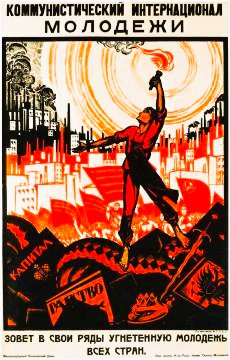
That's not how Comrade Lenin saw our revolution, the Republic of Soviets. Comrade Lenin regarded the Republic of Soviets as a torch that illumines the route the proletarians of all countries must take.
Here is what Comrade Lenin said on this score:
The example of the Soviet Republic will stand before them (that is, the proletarians of all countries—J. St.) for a long time to come. Our socialist Republic of Soviets will stand secure as a torch of international socialism and as an example to all the world's labouring masses. Over there conflict, war, bloodshed, the sacrifice of millions of lives, capitalist exploitation. Over here a true policy of peace and a socialist Republic of Soviets.(see Vol. XXII, p. 218)
Two fronts girdle this torch: the front of the enemies of the proletarian dictatorship who are striving to discredit, whack and extinguish this torch, and the front of the friends of the dictatorship of the proletariat who are striving to hold the torch high and fan its flame.
The task is to hold this torch high and secure it for the sake of the victory of the world revolution.
Comrades, I don't doubt you will do all you can to let the torch burn bright and light the road of all the oppressed and enslaved.
I don't doubt you will do all you can to fan this torch to full splendour to the terror of the enemies of the proletariat.
I don't doubt you will do all you can so that similar torches may be lit everywhere to the delight of the proletarians of all countries.4
(Continuous and prolonged applause)
(All delegates rise and sing the "Internationale" followed by three cheers)
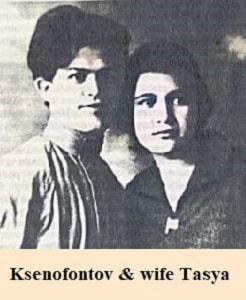
2. LETTER TO KSENOFONTOV.1
I have read your letter and the draft of the article. I apologize for being late in replying.
Here are my comments:
1) I object to your calling yourself "a disciple of Lenin and Stalin." I have no disciples. Call yourself a disciple of Lenin; you have the right to do so, notwithstanding Shatskin's criticism. But you have no grounds for calling yourself a disciple of a disciple of Lenin. It is not true. It is out of place.
2) I object to your referring in a controversy with Shatskin at the close of 1926 to a personal letter from me written in July 1924. All the more because the question under discussion, about a definition of Leninism, was formulated by me in March 1924 before the appearance of my book, On Lenin and Leninism.2 That's apart from the fact that such a reference to a passage in my letter, while not helping you in the least in your controversy with Shatskin, muddles the issue and carries the argument to another plane and may compel me to come out with a statement in the press that would not be in your favour (which I would not like to do).
3) I consider that in the main Shatskin is right and you are wrong. I regret that I did not have the opportunity of looking through your new pamphlet on strategy. I would certainly have dissuaded you from publishing a work so hastily and carelessly compiled, and containing a number of gross errors and incorrect formulations.
4) That, of course, does not mean that Shatskin is right in everything. I shall enumerate his principal errors.
Shatskin, for instance, is mistaken in that passage of his article where he regards Marx's formula about the impossibility of accomplishing the task of the working class within national boundaries as being almost identical with Lenin's formula about the possibility of the victory of socialism in one country. Instead of bringing out the difference between these formulas and disclosing its historical roots, Shatskin evaded the issue with a note that says absolutely nothing, thus slurring over a most important question. But an evasion is not the solution of a question.
Shatskin is also mistaken when he unwittingly contrasts two of Lenin's formulas about the dictatorship of the proletariat (the dictatorship as the rule of one class founded on a special alliance with the toiling sections of non-proletarian classes but restricting the governance of the state to the proletariat alone). Shatskin is right in rejecting the idea of the peasantry sharing power with the proletariat under the dictatorship of the proletariat, but by contrasting Lenin's formulas he shows that he does not understand them.
Nor do I like the crudely self-assured tone of Shatskin's articles; he himself preaches modesty but displays utmost self-assurance.3
5) I advise you not to start a controversy in the press because you are wrong and Shatskin is right in the main. You would do better to devote yourself to a diligent and thoughtful study of Leninism. Furthermore I advise you to give up once and for all the habit of concocting booklets on Leninism hastily. It will not do.
December 30, 1926
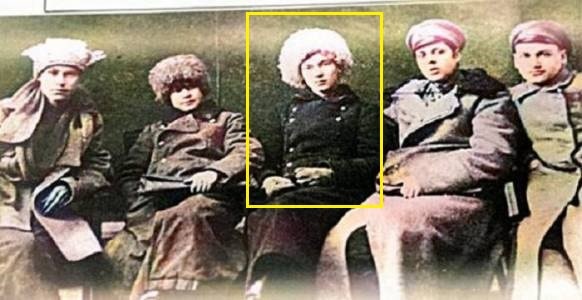
Dear comrade! I just finished reading your work. I can't forgive myself for not looking at it earlier. I consider that your work about Lenin deserves serious attention. It's not my nature to praise my comrades in person, but I cannot refrain from sincerely and comradely praising the author. I was pleasantly surprised that a number of conclusions in my pamphlet on Leninism turned out to be identical with the conclusions of your work. I would advise you to submit the work to print immediately.Ksenofontov's book was published the following year.
I am seized with horror when I see myself placed in the same league as the Trotskyist-Zinoviev gang. Comrade Stalin, I ask for your deliverance from such suspicion and mistrust of me.To no avail.
I ask you to restore the Party's confidence in me, I ask you to return me to Party work.To no avail.
3. TO THE LENA WORKERS.
The shooting down of the Lena workers in April of fifteen years ago [Soviet monument] was one of the bloodiest atrocities of the tsarist autocracy. The gallant fight of our comrades slain by tsarist bullets in the far-off taiga has not been forgotten by the victorious proletariat. Looking back on the road they have travelled, the workers of the Soviet Union can say: Not a single drop of blood of the Bodaibo workers was shed in vain, for the enemies of the proletariat have received their deserts and the proletariat has achieved victory over them already.
Delivered from tsarist and capitalist oppression, you are now in a position to mine gold on the banks of the Vitim not for the enrichment of parasites but for the enhancement of the might of your own workers' State, the first of its kind in the world.1
Honour and glory to those who laid down their lives fighting for the victory of the working class!
Greeting you, dear comrades, on this day of remembrance of the heroic struggle of our fallen comrades, permit me to express my confidence that you will firmly and unswervingly carry on the struggle for a full victory of socialism in our country.
J. Stalin
February 22, 1927
Are these agreements [concessions] merely an experiment or can they be of a more or less prolonged character? That does not depend upon us alone; it also depends upon the other parties. It depends on the general situation. A war may upset all agreements. Finally it depends on the terms of the agreement. We cannot accept enslaving terms. We have an agreement with Harriman who is exploiting the manganese mines in Georgia. That agreement was set for twenty years. As you see, not a short period by any means. We also have an agreement with the Lena Gold-Fields Company, which is engaged in gold mining in Siberia. That agreement has been set for thirty years—a still longer period. Finally we have an agreement with Japan for the exploitation of the oil and coal fields in Sakhalin.
(Interview with the first American labour delegation, Sept. 9, 1927. In Collected Works of J. V. Stalin, 10, pp. 129-130)
4. LETTER TO SHINKEVICH.
I apologize for being late in replying.
1) You refer to what Lenin said against vodka (see Vols. XXVI and XXVII). The Party's Central Committee is, of course, familiar with what Lenin said. And if nevertheless it agreed to introduce vodka it was because it had Lenin's consent to this, given in 1922.
Lenin did not rule out that we might with certain sacrifices on our part get a debt settlement with the bourgeois states and obtain from them a substantial loan or substantial long-term credits. That was what he thought at the time of the Genoa Conference.1
With such an outcome there would have been no need to introduce vodka, of course. But as that outcome failed to materialize and as we had no money for industry—on whose satisfactory development pivoted the fate of our entire national economy—we, along with Lenin, concluded that vodka had to be introduced.
The question facing us was: what was better, enslavement to foreign capital or the introduction of vodka? Naturally we chose vodka because we considered—as we still do—that if we had to dirty our hands a little for the sake of the victory of the proletariat and the peasantry we would resort even to this extreme expedient in the interests of our cause.
The question came up for discussion in the Central Committee of our Party in October 1924. Some members objected to the introduction of vodka without, however, indicating what the alternative sources of the funds needed for industry were. Hence seven Central Committee members, myself among them, submitted the following statement to the plenum:
In the summer of 1922 and the autumn of the same year (September), Comrade Lenin said several times to each of us that since there was no hope of receiving a loan from abroad (failure of the Genoa Conference) it would be necessary to introduce a vodka monopoly and that this was particularly necessary in order to create a minimum fund for the maintenance of the currency and the maintenance of industry. We consider it our duty to make a statement about all this in view of the fact that some comrades refer to earlier statements of Lenin on this subject.
The plenum of the Central Committee of our Party decided to introduce a vodka monopoly.
2) As to your desire to "maintain contact with me by correspondence," I am prepared to meet your wish and ask you to write on such subjects as may interest you. It is possible that I shall reply with some delay. But I shall certainly reply.
With communist greetings,
J. Stalin
March 20, 1927
5. THE PACK OF RED ASSASSINS KEEPS WORKING.
Anthem of the Comintern |
One Of Many (1927) |
Source Right: All soviet movies on RVISION.
Moscow: Stalin the Secretary-General of the Bolshevik Party is trying to remove everyone who is not a convinced Stalinist from the Central Committee of the Third International.
On the other hand the leader of the General Union of Russian Workers managed to defeat every Stalinist candidate at the Union's congress.
From then on the relationship between Stalin the genuine dictator of the Bolshevik Party and Trotsky has soured to the utmost and Trotsky threatens to give battle against what he calls the Communist bureaucracy by relying on the support of non-Bolshevik workingman unions willing to accept Trotsky's dictatorship as a possible means of defeating the Soviet dictatorship.
Moscow: Dispatches out of Moscow assert that Stalin the successor of Lenin and the actual dictator of Russia suffers from a serious abscess in the stomach and from malaria.
Stalin has kept his illness secret from even his closest friends until very recently. Stalin's illness is regarded as a state secret which Russian public opinion must know nothing about.
Stalin the almighty dictator of Russia is gravely ill, notwithstanding the efforts of his closest comrades to hide the fact. The evidence of his illness is openly talked about in Moscow and the city is full of rumours on that account. Some fifteen days ago the presence of the dictator on the rostrum of the Congress of the Communist Party of Moscow produced a rueful impression on the delegates. His countenance was gaunt and the incoherence of his short speech underscored his sickly frailty. Until then the dictator had not been seen in public, only the Soviets' top dignitaries were allowed to see him. Presently he has become invisible to everyone.
The doctors at the sick man's bedside display great unease due to the number of Stalin's enemies among the Bolshevik leaders. The patient's death might stir up fanciful rumours.
Those close to Stalin insist that the foreign aces of medical science should be summoned and the patient delivered entirely unto their care.
The dictator's friends declare that in the present circumstances Stalin's life is even more precious to the Party than the life of Lenin himself was in the past, and that it's necessary to do the impossible to prolong it.
To understand these sentiments it will suffice to remember that after the last and violent internal crisis undergone by Russian bolshevism the near totality of the Leninist "Old Guard," all the leaders who carried out the October Revolution and enjoyed some notoriety, were brutally expelled from the Government and from leading positions in the Party. Those who replaced them are for the most part second-rate men without authority or résumé and who owe their status to Stalin's omnipotence, whose creatures they are. Should their master disappear they would naturally be exposed to the worst perils. And simultaneously would inevitably ignite again, with greater violence, the struggle between hostile factions in the bosom of the Bolshevik Party, a struggle that Stalin alone has restrained with firm hand.
The dictator's friends then desire Stalin's survival at all costs, ignoring that his survival depends on other factors alien to their desire.
With or without Stalin the Soviet system now enters a difficult phase owing to the conflict arisen with Great Britain, a country that is beginning to regard the Soviet system as a great obstacle to its interests and even to world peace.
Daniel CASTELLS.
London: A telegram from Moscow reveals that Stalin's state of health is desperate.
His death is expected at any moment.
Moscow: The doctors attending Stalin the chief Commissar of the Soviet executive power have declared that Stalin will perish within a few weeks from stomach cancer.
The doctors have refused to operate on the patient alleging that his state of health is dire.
The Commissar's sickness has led all political parties in Moscow to intrigue to impose their respective candidates for the succession to Stalin.
Riga: It is confirmed: Stalin and Trotsky have reached a peace deal again.
Trotsky will be returned to his post of President of the Tribunal of Concessions and Russian Reparations.
Trotsky is currently convalescing in a resort of the Caucasus before returning to active Soviet political life.
Geneva: The news report that Stalin the president of the Soviets and Trotsky the generalissimo of the Red Armies have reconciled is being commented upon extensively.
It is known that Trotsky has been authorized to write articles in the newspapers and to pronounce speeches.
It is believed that the post of Russian Ambassador to Tokyo will soon be left vacant and that the victor over Wrangel will fill it.
Madrid, 24: News from London state that Prime Minister Baldwin announced in the House of Commons the Government's decision to (1) break off all relations with the Government of the Soviets, (2) ask the Soviet Government to recall its representatives in London, and of course (3) recall all British diplomats stationed in Moscow. The measure will be tabled before the Chamber for approval on May 26 [approval given].
Russia: Leningrad has witnessed bloody events of great importance. It is given for certain that the British diplomatic representation will depart Moscow on Monday May 30.
Berlin: A telegram from Moscow informs that the agitation in the Bolshevik Opposition increases daily.
A heated debate has recently taken place in the Comintern which has exposed the irreconcilable differences on the question of China which separate Stalin from Trotsky, Zinoviev and Radek.
Radek has delivered a diatribe against Stalin for having dispelled the benefits to Soviet policy reaped by Radek's own work as head of Moscow's Chinese University of the East.
Trotsky and Zinoviev, for their part, far from heeding the orders of the Central Committee of the Communist Party amplify their opposition, disdaining the menace of disintegration of the Third International.
Bucarest: Telegrams from Moscow inform that after the expulsion of Trotsky, Zinoviev and Radek from the Communist Party (the three are said to have been deported to Western Siberia) it is firmly believed that Stalin will be able to control the situation fully, relying upon a special police division which is permanently on duty and able to confront any danger to the Soviet Republic.
The only circumstance to fear is the depletion of the state revenues toward the end of July because the treaties with foreign Banks expire precisely on August 1.
Nevertheless there is a long way to go between now and then, and Stalin is no fellow easily caught unawares.
Riga: The Soviet Government has ordered mass arrests. A state of siege was declared in Minsk Province after verifying Polish troop movements near the border. The situation is serious but it's believed that Stalin will manage it with the political police by his side. Kalinin the President of the Soviet Republic exhorted the people to defend Russia's independence in light of British preparations for war.
Moscow: Two Polish spies were executed in Kharkov.
Moscow: Telegrams from Moscow state that Orlov the President of the Soviet Supreme Council of War was shot dead in the very chamber of the High Tribunal. The assassin was detained.
The tribunal of the Soviet O.G.P.U. (the renowned Tcheka, that "Extraordinary Commission" whose sole mission is espionage and political murder) has admitted that the execution of twenty prisoners without proven charges is the answer of the State to the rising number of assassinations of their chiefs.
It's true that in the days of the Czars a political crime was frequently followed by mass arrests and even executions; but in every case the State provided undeniable evidence of the convicts' guilt or complicity in conformity with the laws then in effect. I do not wish to nor can I say that the proofs presented were clear-cut, but at least the Czars did not descend to the perfunctory level of a slaughterhouse.
The Soviet chiefs, however, have always been regarded as expert assassins and organizers of terror.
Thus Stalin the current director of the Soviet triumvirate was the chief organizer of political murders in the Caucasus and under this concept was responsible for the deaths of many officers in Tiflis.
Trotsky was for some time one of the chieftains of the terrorist batallions in Odessa. Their number of murders was never exactly tallied despite probes by several commissions.
Bukharin led the terrorist operatives of Moscow until 1911 while Litvinov, alias Wallach, planned assassinations and purchased weapons and explosives. Litvinov travelled to London in 1909 after being deported from Paris.
In Paris Litvinov had supplied weapons to a crew of Bolsheviks that committed crimes in Russia mainly against Treasury officials to grab the money they warded. Upon his arrest in Paris on January 4, 1908, they found on him twelve bills of five hundred rubles each whose serial numbers traced back to the robbery committed in Tiflis in 1906. That robbery was organized by Stalin and aided by Krasin. In this fashion the Bolsheviks generally convert their political murders into a source of income.
[...]
The directors of the Soviet believe that their current terror-inspiring executions will decrease the chances of their being assassinated, but evidently the executions will increase those chances. Crime begets crime, notwithstanding the affliction of terror.
Riga: Several hundreds of thousands of unemployed workers demonstrated in Leningrad. Orators addressed the crowd. A Petrograd Soviet member asked for a rotation of active and inactive workers. Several speakers upbraided the Government. The Bolshevik press silences these impressive demonstrations.
Berlin: News from Moscow say the Politburo rejected a motion tabled by the Opposition seeking an overhaul of the Central Commission and making its convocation concurrent with the next Party Congress.
A plenum of the Central Committee is scheduled for July 14-15. Stalin, Chicherin and Voroshilov will be the official speakers. The Central Commission will convene in August so as not to interfere with the celebrations marking the tenth anniversary of the October Revolution. It's been resolved that the Opposition will not be allowed to speak at the Congress nor Trotsky attend it.
Odessa: A heavy thunderstorm caused "enormous" damage, the rooves of some houses were blown off and the sturdiest trees uprooted. The storm sank some vessels offshore, twenty sailors drowned. The "hurricane" derailed and overturned a streetcar, provoking six deaths and serious injuries to ten other riders.
Madrid, 14: News from Moscow state that Dnipro's garrison has mutinied. Government troops are on the way to restore order. The number of dead and wounded is "most high."
Leningrad: News from Leningrad state that the people rose up when they learned that Trotsky was in the city, not in Crimea as supposed. The number of dead is known to exceed one hundred.
Moscow: The struggle underway in the Communist Party, which has split in two factions, grows more violent each passing day. Chicherin has held talks with Trotsky recently to try and bring about a reconciliation with Stalin, putting an end to the intra-Party struggle which so tarnishes the prestige of the Soviet Government, not just abroad but domestically as well.
Trotsky told Chicherin that his reconciliation with Stalin is impossible until Stalin at least grants the members of the Opposition complete and genuine freedom of action to strive for the victory of true socialism—for the current Russian regime is, says Trotsky, "an infamous caricature of socialism."
Furthermore, as a precondition for mollifying his attitude, Trotsky demands an immediate halt to the regime of summary executions that Opposition members are subjected to.
Another telegram from Moscow affirms that Trotsky has declared, in respect of his talks with Chicherin, that he will not give himself a moment of rest until he succeeds in deposing Stalin, whose execution he would have already ordered were he not fearful that so doing might spark a revolution [i.e., a Thermidorian Reaction].
Trotsky surrounds himself constantly with a secret service especially selected from among his most loyal supporters. Meanwhile Stalin is a recluse with the pretext of his lingering illness.
The partisans of one and the other faction believe that the decisive battle between the two sides will be given at the beginning of autumn.
Moscow, 29: Stalin has in the newspaper Pravda made extremely belligerent declarations against England.
| And Now For Something Completely Different |